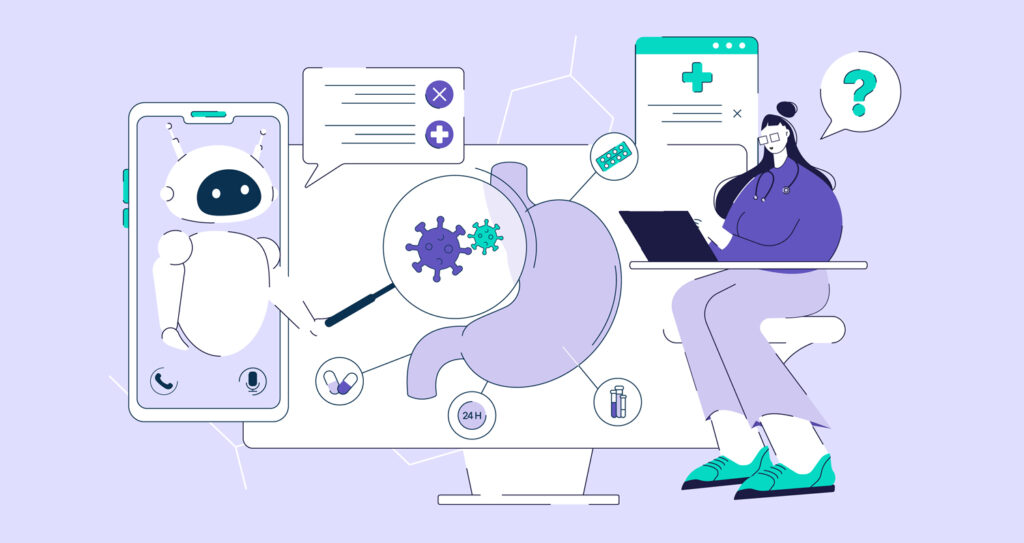

Artificial intelligence is increasingly becoming the first point of contact for people seeking answers to health-related questions. According to research by KFF (an independent American non-profit organisation specialising in health policy research), around one-third of adults have already used AI to search for medical information or health advice.
Many doctors joke that their new “competitor” walks into the consultation room with the patient. The phrase “Doctor, ChatGPT told me that...” is gradually becoming a familiar part of medical appointments.
But behind this joke lies a serious question: can artificial intelligence really help us take care of our health, and if so, when should we trust it and when is it better to consult a professional?
Let’s explore this in our blog!
What Can AI Really Help With?
- 📊 Explaining test results in simple terms.You receive your test results and see a dozen unfamiliar indicators. AI can translate medical terminology into plain language, explain what each indicator measures, and describe what doctors typically pay attention to.
- 🔎 Summarising information from scientific sources.AI is good at finding and summarising information from different sources. Instead of reading a lengthy scientific article about preventing cardiovascular disease or improving sleep, you can ask it to summarise the main findings in simple language.
- 🧠 Supporting mental well-being.AI can also be useful for supporting mental health. For example, it can help you explore the causes of stress, suggest breathing or relaxation exercises, remind you of the importance of rest, or help you keep a mood journal. These tools do not replace working with a professional, but they can help you become more aware of your emotional state and recognise signs of exhaustion or burnout in time.
- 👨⚕️ Preparing for a doctor's appointment.AI can also be useful when preparing for a medical consultation. For example, it can help organise your symptoms, compile a list of questions for a specialist, or remind you of lifestyle factors that may affect your well-being.
- 💪 Building and maintaining healthy habits.Modern systems are particularly effective as personal assistants for developing a healthy lifestyle. They can help plan meals, track water intake, analyse fitness tracker data, or identify patterns between sleep, physical activity, and how you feel.
In other words, when AI is used for learning, analysis, and self-organisation, the benefits can be very real.
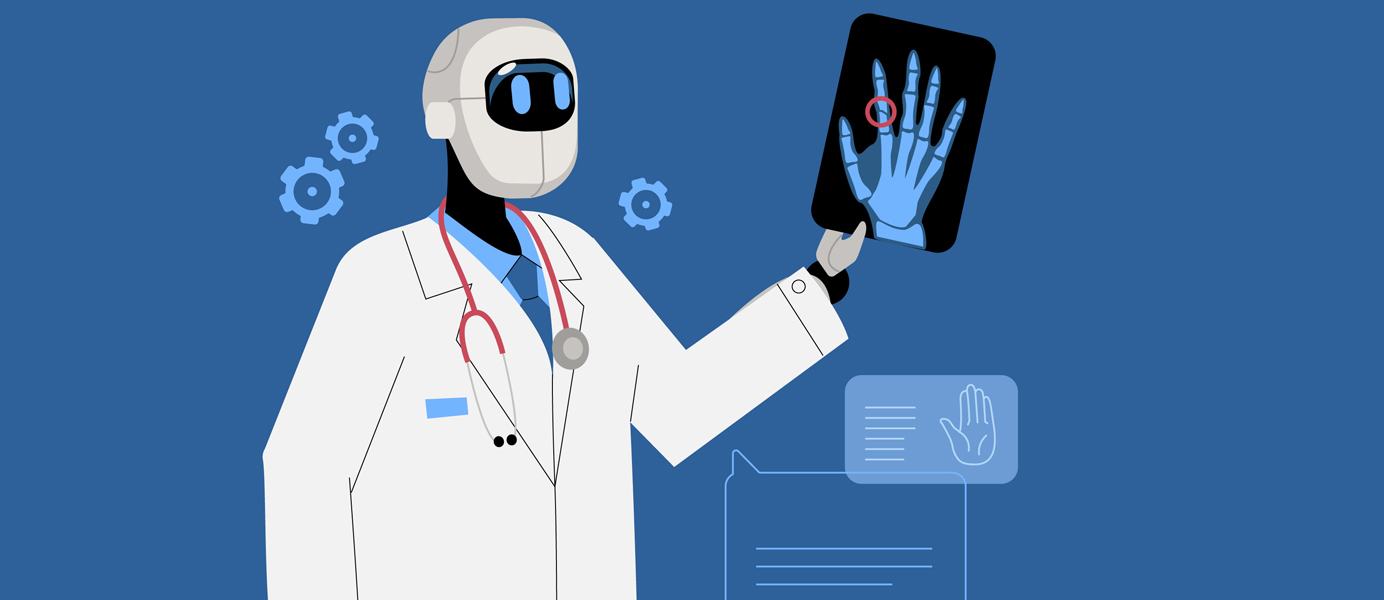
Running, Sports and Recovery: How Can AI Help Athletes?
Sports enthusiasts have become some of the most active users of artificial intelligence. And it is hardly surprising: training generates enormous amounts of data.
🏃♀️ Runners can analyse their pace, heart rate, training load, and recovery. For example, AI can explain why your knees may have started hurting after an increase in mileage, identify factors that could contribute to fatigue, or suggest ways to increase training volume more safely.
🏋️♀️ The same applies to strength training. If someone keeps a workout log, AI can help assess progress, explain the principles of gradually increasing training loads, or highlight possible signs of overtraining.
🚴♂️ It can also be useful for cyclists, swimmers, hikers, and fitness enthusiasts. For example, it can help create a training plan for an upcoming competition, assess the balance between training and recovery, or explain how different training zones work.
But it is important to remember the limitations.
If your Achilles tendon hurts after a run, your knee hurts during squats, or you feel dizzy after a workout, AI may suggest possible explanations. However, it cannot see your movement technique, examine you, or assess swelling or restricted joint mobility. Therefore, any advice regarding sports injuries should be treated as a starting point for further action, not as a definitive diagnosis.
Three Things You Should Not Trust to Artificial Intelligence
Despite all the advances in technology, there are tasks for which AI is still not suitable.
🚫 Diagnosing Medical Conditions
A medical diagnosis is based on more than a patient's description of their symptoms. A doctor evaluates numerous details: examination findings, test results, imaging studies, medical history, and even the absence of certain symptoms.
Artificial intelligence can only see the information provided to it.
🚫 Prescribing Treatment
Even a correct diagnosis does not mean that everyone should receive the same treatment. Age, underlying conditions, allergies, other medications, and dozens of additional factors can fundamentally change the recommendations.
Therefore, AI should not be used as a source of individualised medical prescriptions.
🚫 Handling Medical Emergencies
Chest pain, loss of consciousness, signs of a stroke, a severe allergic reaction, or a sudden deterioration in someone's condition are not situations in which you should engage in a lengthy conversation with a chatbot.
These situations require professional medical assistance.
⚠️ Don't Forget About Cybersecurity
Before sending test results, medical reports, or other documents to a chatbot, make sure you understand how this data is processed and stored. Where possible, avoid sharing unnecessary personal information, such as document numbers, addresses, contact details, financial information, or other people's data.
How Can You Ask Questions to Get More Useful Answers?
The quality of an AI response largely depends on the quality of the prompt.
❌ A poor approach: My knee hurts. What should I do?
✅ A much more useful prompt: I am a recreational runner. After increasing my weekly mileage by 25%, I developed pain on the inner side of my knee when walking downstairs. List possible causes. Rely only on clinical guidelines and reliable medical sources. Do not diagnose me. Also identify the symptoms that would warrant a medical consultation.
❌ A poor approach: I want to lose weight. I will send you photos of my food. Tell me how many calories it contains and what I should eat.
✅ A much more useful prompt: My goal is to lose 5 kg without following restrictive diets. I am 35 years old, 170 cm tall, weigh 78 kg, run three times a week, and do strength training twice a week. Act as my food diary assistant. Analyse photos of my meals, estimate their calories and macronutrients, keep a running daily total, and highlight excessive sugar intake or insufficient protein, vegetables, or water. If an estimate is approximate, make that clear. Do not prescribe diets or provide medical advice.
❌ A poor approach: Tell me about Hashimoto's thyroiditis.
✅ A much more useful prompt: Explain what Hashimoto's thyroiditis is in simple language for someone without a medical background. Describe its main causes, symptoms, diagnostic methods, and current treatment approaches. Rely only on authoritative English-language sources, such as recommendations from the American Thyroid Association, the NHS, or publications in peer-reviewed medical journals. If sources disagree, identify these differences separately. Provide links to the sources used at the end. Do not diagnose me or provide individualised medical recommendations.
The more context you provide, the less likely you are to receive a generic or misleading answer.
It is useful to ask AI to:
- refer to recommendations from the WHO, NHS (the National Health Service in the United Kingdom), CDC (the US Centers for Disease Control and Prevention), Mayo Clinic, and other authoritative sources;
- use English-language primary sources and scientific publications whenever possible;
- indicate the level of evidence supporting the information;
- identify conflicting evidence;
- explicitly highlight situations in which a medical consultation is necessary.
Taking Care of Your Health Starts Long Before Illness
Artificial intelligence is unlikely to replace a family doctor, cardiologist, or sports medicine specialist. However, it has already become a tool that helps people better understand their bodies, develop healthy habits, and make more informed decisions.
At the same time, health is about more than eating well, running regularly, or having medical tests on time. It is also important to be prepared for unexpected events and take care of your future and the well-being of your loved ones in advance.
That is why a responsible approach to health usually combines several elements: prevention, physical activity, regular medical check-ups, attention to the body's signals, and financial protection in the event of difficult life circumstances. Life and health insurance is one of the tools that can support this long-term commitment to caring for yourself and your family.
And what about artificial intelligence? Its best role today is not to be your doctor, but to help you ask the right questions and find information that brings you closer to a healthier life.